Initial attack FIRE MITIGATION
Snowpack & Wildfire
Colorado’s Low Snowpack and What It Means for Fire Danger This Year
1/18/2026
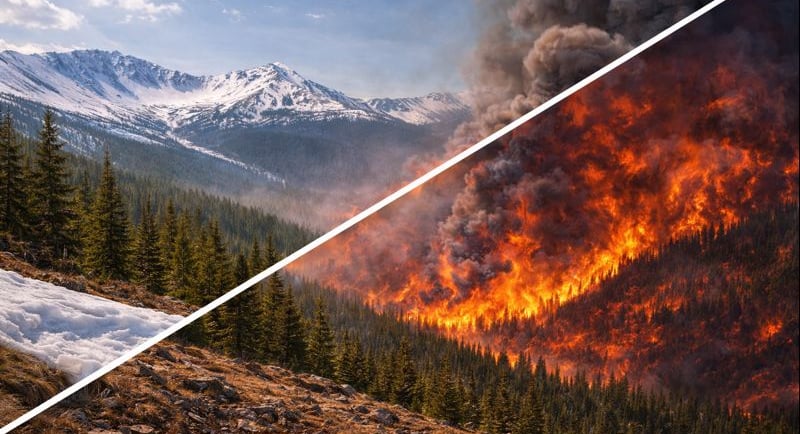
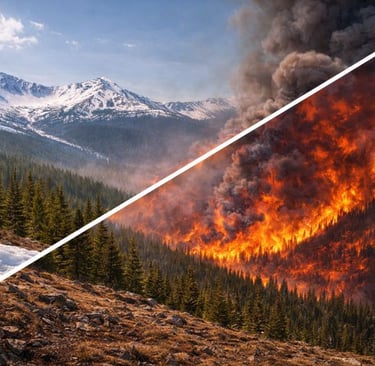
Colorado’s winter snowpack plays a critical role in determining how severe wildfire season can become. This year, snow levels across much of the state have been well below average, and that has important implications as we move toward warmer months.
Snowpack acts as a natural water reservoir. When snow accumulates through winter and melts gradually in spring, it helps keep soils moist, supports vegetation, and slows the drying of grasses, shrubs, and forests. When snow levels are low, that process changes dramatically.
With reduced snowpack, spring runoff occurs earlier and faster, leaving landscapes dry for a longer portion of the year. Vegetation that normally stays green into early summer can dry out weeks sooner, turning grasses and brush into easily ignitable fuel. Forested areas are also affected, as soils lose moisture earlier, stressing trees and increasing the availability of dead and dry material on the ground.
The result is a longer and more intense fire season. Fires can start earlier in the year, spread more quickly, and burn with greater intensity when fuels are dry and conditions align. Low snowpack also means less water available later in the season for suppression efforts and ecosystem recovery.
It’s important to understand that wildfire risk isn’t driven by one factor alone. Wind, temperature, humidity, and ignition sources all play major roles. However, low snowpack sets the stage, increasing baseline risk before the first hot, windy days even arrive.
For homeowners, especially those in wildfire-prone areas, this makes proactive preparation more important than ever. Steps like managing vegetation around structures, understanding defensible space, and identifying vulnerabilities early can significantly reduce risk. Waiting until peak summer conditions arrive often means limited availability, higher costs, and fewer options.
Low snow years don’t guarantee wildfires—but they do raise the stakes. Taking action early, while conditions are still manageable, is one of the most effective ways to improve property resilience and reduce potential impacts as fire season approaches.
Expert Fire Mitigation for Homes and Land.
Contact
Get in touch with us
Eli@initialattackfiremitigation.com
719-343-0670
© 2026. All rights reserved.